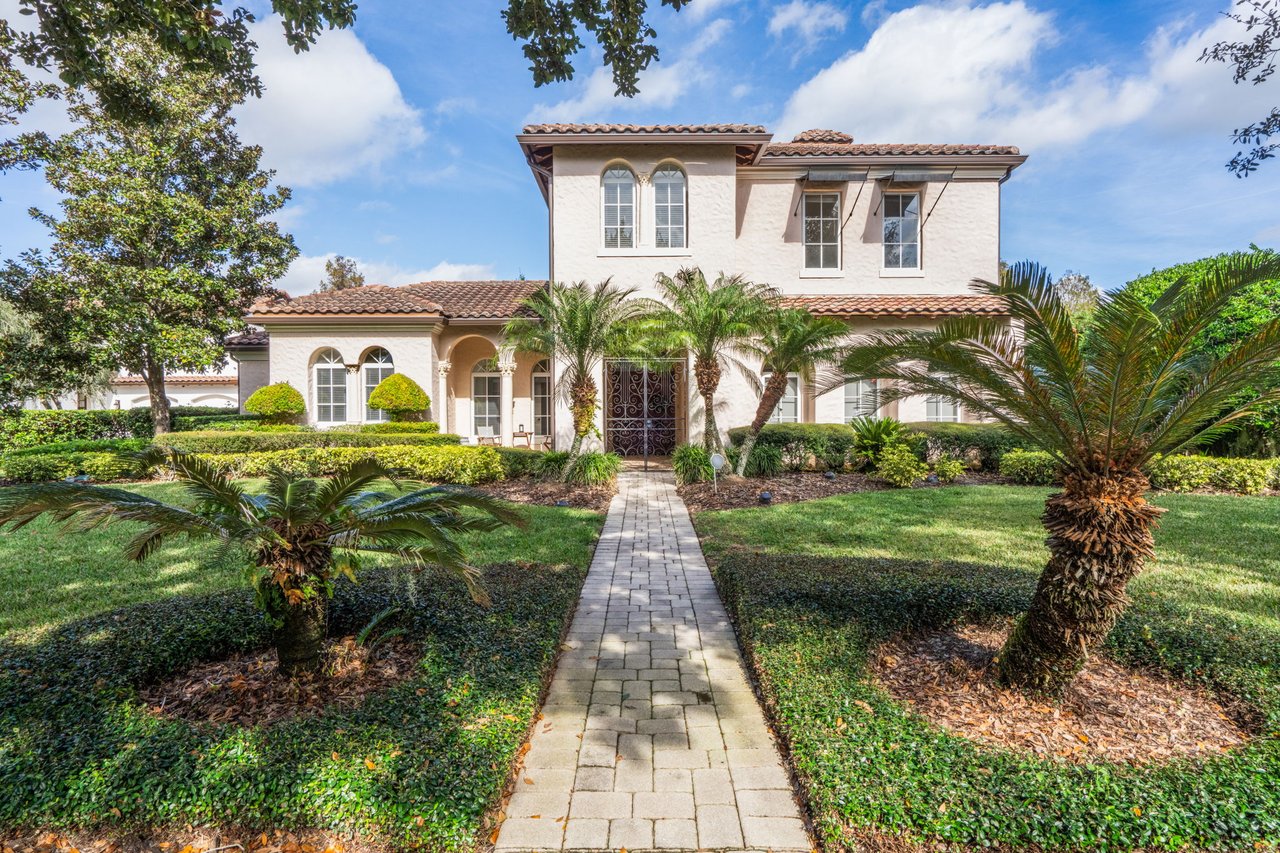
Open three tabs for the same Island Village floor plan and you will get three different answers to a question that should have exactly one answer. One national new-construction portal lists the monthly HOA fee at $325. A second site, tracking the same community, puts it at $310.42. A third site's own FAQ page states flatly that there are no homeowner association fees at all. Same neighborhood. Same builder. Three numbers that cannot all be true at once.
If you are comparing Island Village to an older Celebration village, or to a new-construction community somewhere else in Central Florida, this is not a rounding error you can shrug off. A few hundred dollars a month is real money over the life of a mortgage, and the gap between "$325" and "zero" is the gap between a community that costs an extra $3,900 a year to live in and one that doesn't. The portals disagree because the underlying reality is genuinely unsettled, and that is the part worth understanding before you write an offer.
Why There Isn't One Fee to Find
Celebration's original villages, the ones built out through the late 1990s and early 2000s, have had two decades for their fee structure to settle into something knowable. Every home pays into the Celebration Residential Owners Association, the master HOA known as CROA, and CROA dues across the town generally run in the $280 to $490 per month range depending on property type. On top of that, the Celebration Community Development District, a special-purpose local government created under Florida law to finance roads, landscaping, and stormwater systems, levies its own annual assessment that shows up on the county tax bill rather than in the HOA line item. That district is real. It has an office, a documented meeting schedule, and published finances, and it has been collecting assessments in Celebration for years.
Island Village is a different animal because it is still being built. Homes there are delivered in phases, single-family homes, paired villas, townhomes, and bungalow-style cottages, and each phase can carry a different fee structure depending on what infrastructure that specific parcel financed and when. One buyer's guide to the community puts it plainly: CDD status in Island Village "can vary by sub-phase and parcel," and buyers should not assume it matches the fee structure of Celebration's original villages, because it generally does not. The same logic applies to the HOA number. A portal snapshot from three weeks ago and one from three months ago can both be accurate for the specific homes they were tracking at the time, while still contradicting each other about what "Island Village HOA fees" means in general.
The same phase-by-phase reality shows up in pricing too, which is its own source of confusion if you are comparing Island Village to a resale elsewhere in town. One portal shows Island Village homes priced from $579,990. Another shows a starting price of $549,990. A third, tracking the community's full single-family buildout of roughly 561 homes, shows a range of $680,000 to $1.4 million. None of these is wrong. They are describing different product types within the same 729-homesite community: attached townhomes and bungalows anchor the low end, and detached single-family homes, some running up to nearly $1.9 million for larger executions, anchor the high end. Ask which product type a "starting price" refers to before you compare it to anything.
If a listing quotes you a single HOA number for Island Village without naming the specific phase or parcel, treat it as a starting point for a conversation, not a fact you can build a budget around.
The Highway Is Doing More Work Than You Think
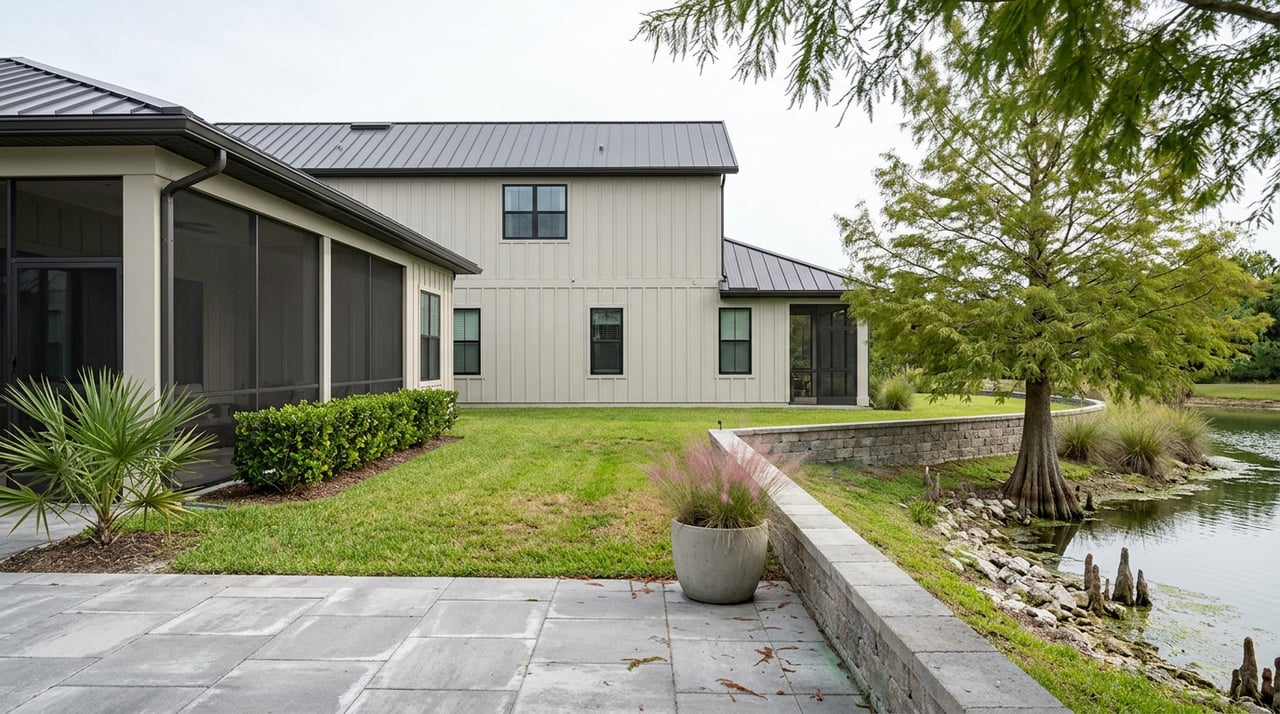
Part of why Island Village gets treated as its own case, fee-wise, is geography. The village sits on Celebration's western edge, physically separated from the original 1990s-developed villages by I-4 and reconnected to them only by the Celebration Avenue trellis bridge. Mattamy built the community around existing wetlands and ponds rather than filling them, which means a larger share of homesites back to water or conservation views than the tighter, sidewalk-and-porch street grid found in older parts of town. It also means Island Village has its own self-contained amenity core, a resort-style community pool with a zero-entry design, a clubhouse, a fitness center, a walking trail with fitness stations, an outdoor kitchen, and a playground, so residents are not dependent on crossing the highway to use a pool or a trail.
That self-contained design is exactly why the fee structure doesn't automatically inherit the rest of Celebration's numbers. A new, separately amenitized village financed in its own construction phases is a different assessment base than a 30-year-old village whose bonds are further along in repayment. If you're used to comparing Celebration listings by a single "expect around $300 to $400 a month" rule of thumb, Island Village is the one part of town where that shortcut can fail you in either direction.
What This Means at the Closing Table
Here is where the incentive structure adds one more layer worth knowing before you sit down with a builder representative. Mattamy's own rate-lock and incentive paperwork states that the seller will pay up to 6% of the total purchase price toward discount points, closing costs, and prepaids, but only if the buyer uses both the closing agent Mattamy selects and finances through Mattamy's affiliated lender, Mattamy Home Funding. Actual savings vary by community, floor plan, lot premium, and the options selected on the home, and the credit cannot be combined with other incentive offers except where the purchase agreement specifically allows it.
Builders elsewhere have applied similar closing credits toward a buyer's first year of HOA dues, which is worth asking about directly if a Mattamy representative quotes you a monthly fee during a community visit. A number that includes a promotional credit toward year one can look smaller than the number that reappears in year two, once the incentive rolls off. Before you anchor a budget to any fee a sales rep tells you verbally, ask for it in writing, tied to the specific lot you're considering, and ask whether it reflects a temporary credit or the parcel's ongoing assessment.
The same verification applies to CDD status. Because Island Village's district obligations are still being finalized phase by phase, the honest answer to "does this specific home carry a CDD assessment" is often "we need to check the parcel," not a number pulled from a general community FAQ. Your title company can confirm this before closing, and it is a fair question to put to Mattamy or the HOA management company directly rather than relying on a portal's community-wide summary.
A Few Direct Questions
- Is the HOA fee the same for every home in Island Village? No. It depends on the phase and product type, and portal listings for the same community have shown figures ranging from $310 to $325 a month, with at least one site listing no fee at all for homes it was tracking.
- Does Island Village have a CDD assessment like the rest of Celebration? It may, but status varies by sub-phase and parcel, and buyers should confirm the specific figure for their lot rather than assume it matches older villages.
- Does the starting price I saw online apply to the home I'm touring? Only if it's the same product type. Attached townhomes and bungalows start well below the detached single-family range, which itself spans from the $600,000s past $1.8 million depending on lot and size.
- Will a builder incentive change my ongoing monthly cost, or just my closing costs? It depends on how the credit is applied. Ask specifically whether any incentive is a one-time closing credit or something that offsets recurring dues for a limited period.
If you are weighing Island Village against a resale in one of Celebration's original villages, or against new construction somewhere else in Central Florida, the number that matters is the one tied to your actual parcel, not the one on a general community page. That is a conversation worth having before you fall for a floor plan.
I've walked buyers through exactly this kind of fee reconciliation on new construction in Celebration, and I'm happy to pull the current parcel-specific numbers for any Island Village phase you're considering. If you'd like a second set of eyes on what a specific lot actually costs to own, not just to close on, Let's Connect and I'll help you get the real figures before you make an offer.
Tiffany Baro is a Celebration, Florida real estate agent specializing in Celebration and Disney-area communities, including new construction at Island Village.